Process
Bathroom renovation step by step: the order the work has to follow
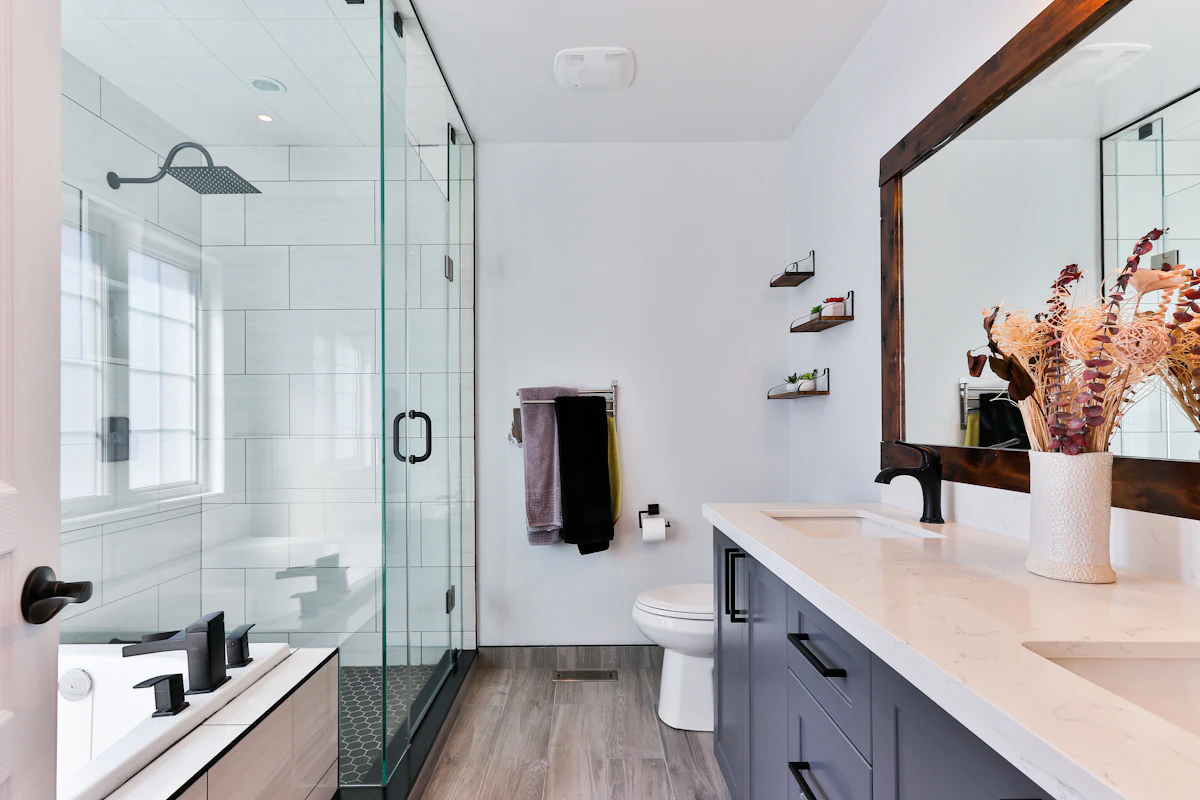
A bathroom renovation has six phases, and the order between them is not negotiable. It is not each contractor’s preference: every phase needs the previous one not merely finished, but cured. Change the order to “save time” and you pay for it in rework, almost always weeks after the job looks complete.
This guide walks through the six phases in their real order, and adds the part that manufacturer guides almost never cover: what has to be decided before each one. That, rather than the execution, is where most timelines slip.
The six phases, in the order they have to happen
- Demolition. Removing old tile, fixtures and flooring, protecting adjacent areas and sending the debris to a licensed construction waste operator. This is the phase where whatever was hidden behind the old tile comes to light, typically degraded pipework in older buildings.
- Plumbing and electrics. Chasing the walls for new water and waste pipes, and bringing the electrical installation up to wet-room requirements. Everything destined to sit inside the wall is resolved now, because after this phase the walls close.
- Waterproofing. Applied across the whole floor and up the walls, before any covering goes on. It is the most invisible phase and the one that most often fails: we set out what the law requires and what usually gets skipped in the dedicated waterproofing guide.
- Tiling. Laying the tile, normally walls first and then the floor, with grout suited to a wet room.
- Fixtures and fittings. Toilet, basin, shower or bath, taps, mirror and accessories, installed onto finished surfaces.
- Final clean and handover. Full clean, a check of every water and electrical connection, and a written handover report.
The logic behind this sequence is easy to summarise: first what stays hidden, then what you see. Each phase seals the one before it. Once the tile is down, going back to the plumbing means breaking the tile.
What has to be decided before each phase
This is the table that rarely gets published, and it is the one that prevents most delays. It is not about what the team does: it is about what the client has to have settled for the team to move forward.
| Phase | What has to be decided beforehand |
|---|---|
| Demolition | The scope: what goes and what stays. Whether the toilet, shower and basin keep their positions or move |
| Plumbing and electrics | Final position of every fixture, light point, socket and towel rail. After this phase, changing your mind means reopening walls |
| Waterproofing | Nothing new. But the substrate has to be dry, and that cannot be rushed |
| Tiling | Tile chosen, bought and delivered to site. The format decides the waste and the number of cuts |
| Fixtures and fittings | Sanitaryware, taps and shower screen bought and available. Special sizes or made-to-order colours are confirmed here, not later |
| Cleaning and handover | Nothing |
Note where the two critical rows sit: before phase 2 and before phase 4. Fixture positions have to be settled before the walls close, and the tile has to be physically on site before the waterproofing finishes curing. Missing either of these does not delay the job by hours: it delays it by days or weeks, because it forces undoing work or waiting on a delivery.
This is not a quirk of ours. In a national survey of contractors, site supervisors and clients published by the Instituto Superior Técnico, the number one cause of delay in Portugal was precisely late decisions by the person commissioning the work, ahead of any technical surprise.
Who does what, and where the job tends to break
A bathroom packs more trades per square metre than any other room in the house. A normal renovation involves at least three:
- Builder: demolition, chasing, levelling surfaces and laying tile.
- Plumber: water and waste runs, and later the installation of sanitaryware and taps.
- Electrician: circuits, light points, sockets and the protective devices a wet room requires.
The problem is rarely inside any one trade: it sits at the boundaries between them. The plumber has to finish before the builder closes the walls. The electrician has to run cables before the tiling. Whoever waterproofs needs to know exactly where the pipe penetrations already are.
When each trade is hired separately by the client, it is the client who becomes responsible for coordinating these handovers, without any practical means of doing so: a tradesman who arrives while the previous one is still working leaves and comes back when he next has a slot, which in a full diary can mean another week. This is exactly why we work with a single contract and a single person responsible for coordination, rather than leaving the boundaries between trades to whoever is paying.
How long it takes, and why we do not publish per-phase durations
For a reference bathroom of 5 m², we work with these total on-site timelines:
| Level | Total on-site time |
|---|---|
| Budget | 10 to 15 days |
| Mid-range | 15 to 21 days |
| Premium | 21 to 30 days |
A note of honesty about what is missing from that table: we do not publish a separate duration for each of the six phases. The available market data supports total durations by type of job, not a reliable phase-by-phase breakdown, and an invented number per stage would read better than it would work. What can be seriously committed to is the total for the level, broken into stages with concrete dates in your own contract, after the flat has been seen.
If you come across a guide announcing “demolition: 1 day, plumbing: 2 days” as a universal rule, it is worth asking where that number comes from. In a 4 m² bathroom with everything staying put and a 9 m² one where the shower moves wall, those two phases have nothing in common.
The waits that no amount of pressure shortens
Part of the timeline is not work: it is obligatory waiting. There are three, and they account for almost the entire difference between a sound job and a deferred problem.
- Waterproofing cure. Between 24 hours and several days, depending on the product and the ambient humidity. The surface is dry to the touch long before the layer has cured through.
- Adhesive and grout cure. Each product has its own time before grouting and before the floor can be walked on. A serious team tells you which product and what its curing time is, rather than answering “it will be fine tomorrow”.
- Material lead times. Not a cure, but it counts in the calendar all the same. Stock tile arrives in days; special formats, made-to-order sanitaryware and bespoke shower screens can take weeks.
Worth remembering A quote promising the same job in far less time than others of the same scope is almost always cutting into one of these three waits. The first two leave no visible trace on handover day: they leave it months later.
Can you keep using the bathroom during the work?
No, and it is worth being clear about this before scheduling. From demolition onwards the room has no toilet and no water, and there is no realistic way to recover it midway: the waterproofing and tiling phases carry curing times that rule out any interim use.
In a flat with two bathrooms this resolves itself. In a flat with only one, it is a decision to take before booking the job, not halfway through it. It is worth planning around the full timeline for your level plus some slack, rather than the most optimistic scenario.
How to confirm the order is being respected
Whoever is paying is not on site every day, and most of what matters ends up covered. Three simple checks cover nearly everything:
- Ask for photographs at the end of phase 3, before the tile goes down. It is the only moment the waterproofing is visible. After that, nobody can confirm what lies underneath without breaking the surface.
- Confirm phase 2 closed before phase 3 started. If walls are still being chased after the waterproofing has been applied, something has gone wrong in the sequence.
- Ask for the timeline by stages with dates, not a single global deadline. A global deadline only reveals the delay once it is beyond recovery; a staged one reveals it at the first stage that slips.
The final timeline and fixed price for your bathroom come after a site visit, because it is the specific constraints (the state of the existing plumbing, access, building rules) that decide between the bottom and the top of the range. The figures by level are published here, and the scope of each level is detailed on the bathroom page.
Frequently asked questions
Demolition, then plumbing and electrics, then waterproofing, then tiling, then fixtures and fittings, and finally cleaning and handover. This order is not each team's preference: every phase needs the one before it to be finished and cured. Changing the order almost always means reopening something that had already been closed.
With the layout, not the materials. The first decision that changes everything else is whether the toilet, shower and basin stay where they are or move. That decision drives the amount of chasing, the timeline and much of the budget. Only then does choosing tiles and fixtures make sense, because by that point you know what the space allows.
We work with 10 to 15 days at the budget level, 15 to 21 days at mid-range and 21 to 30 days at premium, for a reference bathroom of 5 m². We do not publish per-phase durations because the market data does not reliably support them. What can honestly be committed to is the total for the level, broken into stages with dates in the contract.
No, for practically the whole period. From demolition onwards the room has no toilet and no water, and the curing times for waterproofing and tiling make any interim use impossible. In a flat with a single bathroom this has to be resolved before scheduling the job, not halfway through it.
Late decisions and late materials, in that order. Tiles and fixtures have to be chosen, bought and physically delivered before the phase that uses them. A tile choice still open when the waterproofing has already cured means a team standing idle, and a format that is out of stock can add weeks to the schedule.
As a general rule no, when the work stays inside the flat and does not touch the structure, the façades or the roof: the typical case of replacing finishes, redoing plumbing and swapping sanitary fixtures. Two caveats are always worth confirming before starting: each municipality can have its own regulations, and the situation changes if structural elements are altered or if the work reaches shared parts of the building, such as the common soil stack. We confirm this case by case during the site visit, before the quote is closed.
Want a real number for your own case?
The figures above are market references. Your fixed quote, in writing, is confirmed after we see the space.